
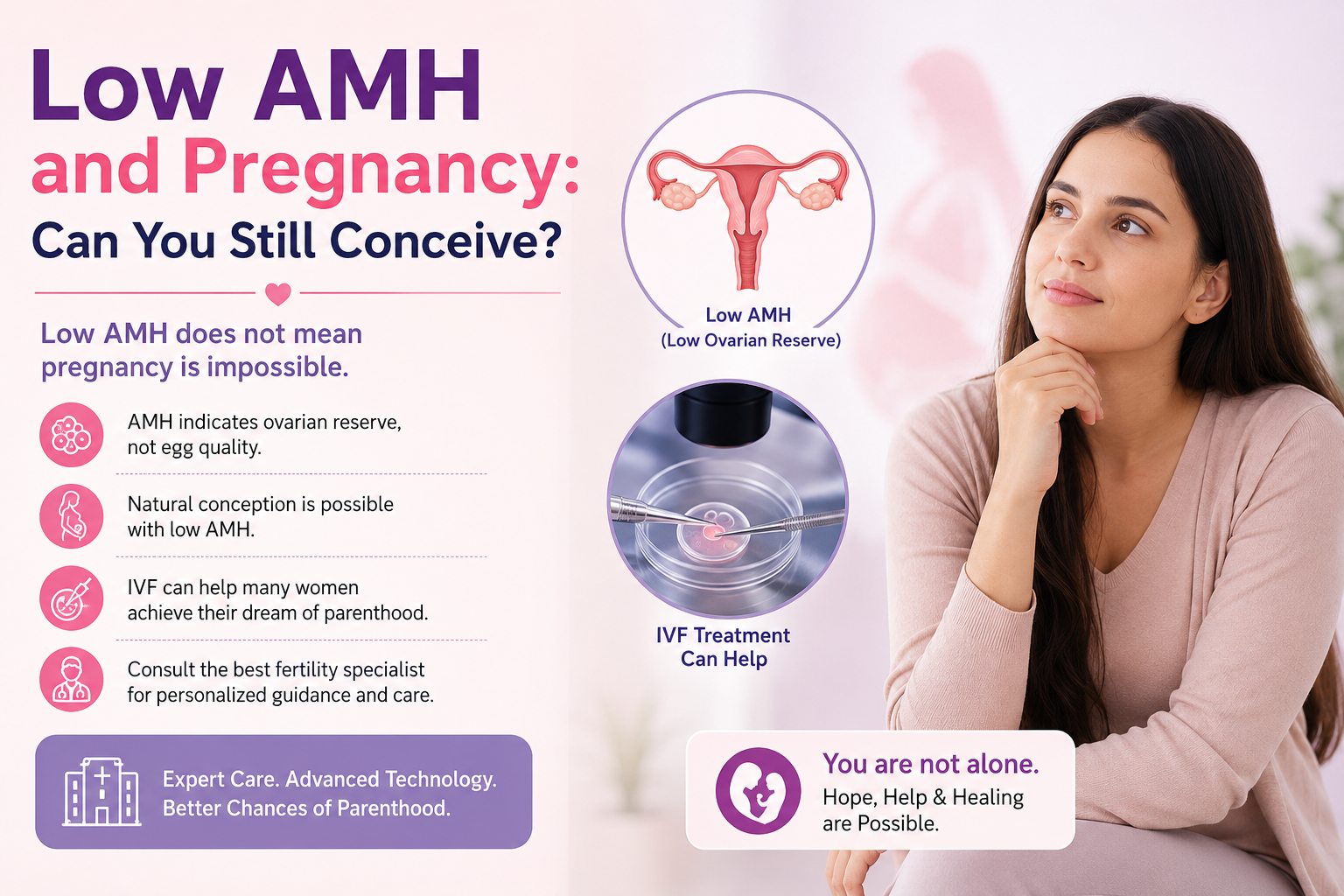

Low AMH can be worrying when you are trying to start or expand your family. Many women wonder, “Can I get pregnant with low AMH?” or assume that a low AMH level means pregnancy is impossible. The good news is that low AMH does not automatically mean you cannot conceive.
AMH, or Anti-Müllerian Hormone, is commonly used as one indicator of ovarian reserve. It can provide useful information about the remaining pool of eggs, but it does not by itself determine whether a woman can become pregnant. Age, ovulation, egg quality, fallopian tube health, sperm health and other fertility factors also play important roles.
If you have been diagnosed with low AMH, consulting a qualified fertility specialist can help you understand your individual fertility potential and choose an appropriate treatment plan.
What Does Low AMH Mean?
AMH is a hormone produced by small follicles in the ovaries. An AMH blood test is often used to estimate ovarian reserve, which refers to the approximate number of eggs remaining in the ovaries.
A low AMH level may suggest a reduced ovarian reserve. However, AMH should not be interpreted as a direct measure of egg quality or a definite prediction of natural pregnancy.
Two women with similar AMH levels may have very different fertility outcomes. This is why fertility evaluation should consider several factors rather than relying on AMH alone.
A fertility doctor may assess:
- Age
- Menstrual cycle and ovulation
- AMH and other hormone levels
- Antral follicle count through ultrasound
- Fallopian tube health
- Uterine health
- Partner’s sperm parameters
- Previous pregnancy history
- Duration of trying to conceive
This complete evaluation can provide a clearer picture of fertility.
Can You Get Pregnant With Low AMH?
Yes, pregnancy is possible with low AMH.
Low AMH primarily indicates that the number of eggs available may be lower than expected for your age. It does not necessarily mean that ovulation has stopped or that natural conception cannot occur.
If you are ovulating and there are no other significant fertility problems, natural pregnancy may still be possible.
However, low AMH can become more important when combined with increasing age or other fertility concerns. Since egg quantity generally declines over time, women with reduced ovarian reserve may benefit from discussing their fertility options with a specialist sooner rather than waiting for a long period.
The right approach depends on your age, menstrual cycle, test results and reproductive goals.
Does Low AMH Affect Egg Quality?
One important point is that AMH mainly provides information about egg quantity rather than egg quality.
Egg quality is strongly influenced by age. A woman with low AMH may still have eggs capable of producing a healthy pregnancy.
Therefore, it is not accurate to say that low AMH means that all remaining eggs are poor quality.
Your fertility specialist may consider AMH together with age, ultrasound findings and other investigations to understand your reproductive situation.
Can You Conceive Naturally With Low AMH?
Natural conception may be possible if you continue to ovulate and there are no major problems involving the reproductive system or sperm.
However, the chances of conception can vary considerably between individuals.
If you have been trying to conceive without success, a fertility evaluation can help identify whether there are additional factors affecting pregnancy.
Depending on your situation, your doctor may recommend:
- Monitoring ovulation
- Timed intercourse
- Ovulation-related treatment when appropriate
- Evaluation of the fallopian tubes
- Semen analysis
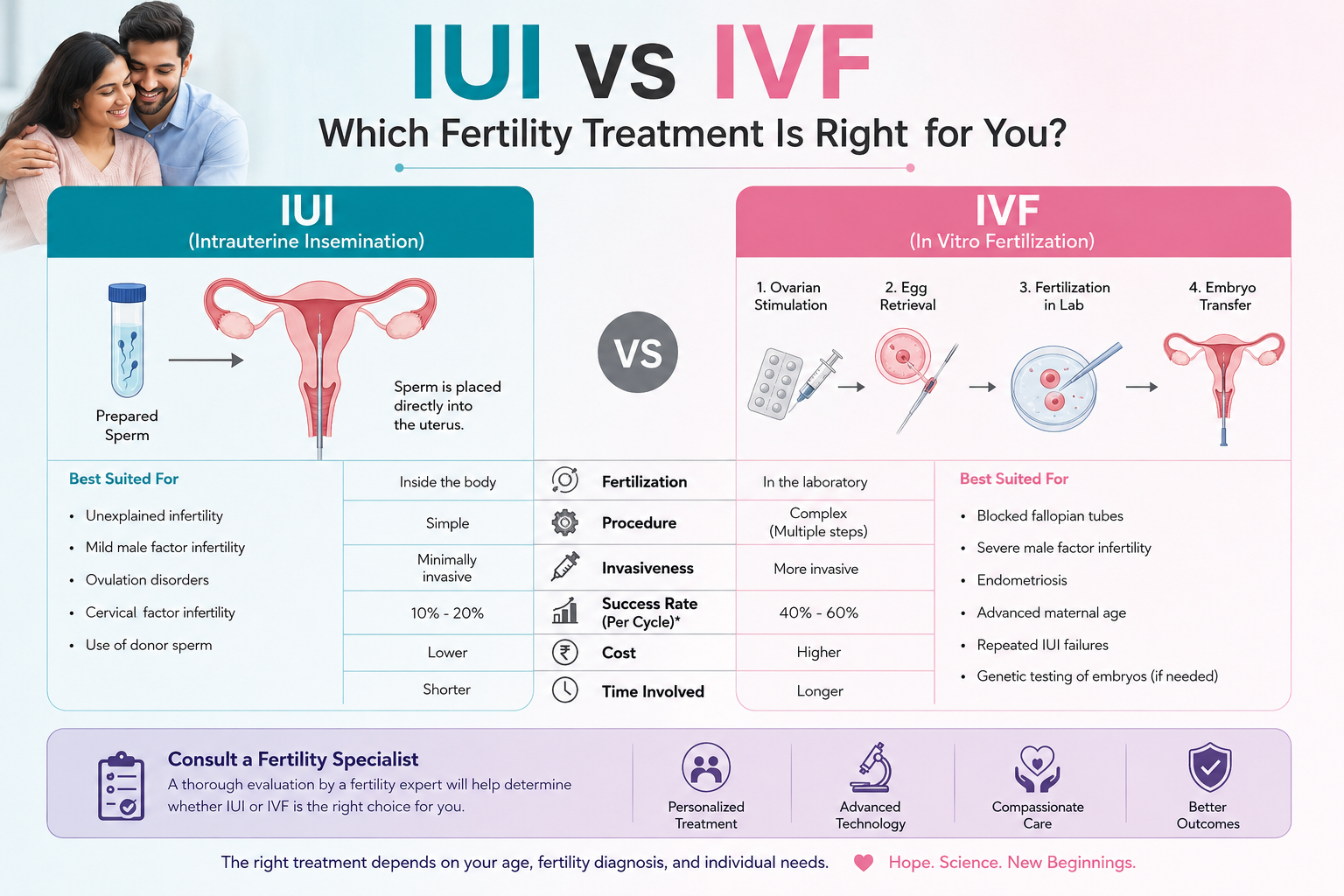
- Intrauterine insemination (IUI)
- IVF treatment
- Other assisted reproductive options
The appropriate treatment should be selected based on your individual fertility assessment rather than AMH alone.
Low AMH and IVF: Can IVF Help?
IVF for low AMH may be considered when natural conception is unsuccessful or when other fertility factors make assisted reproduction appropriate.
During IVF, fertility medications are generally used to stimulate the ovaries so that multiple follicles can develop. The eggs are then retrieved and fertilized with sperm in a laboratory. Suitable embryos may subsequently be transferred into the uterus.
Women with low AMH may have a lower ovarian response to stimulation, meaning fewer eggs may be retrieved in some cases. However, the response varies from person to person.
This is why an individualized IVF plan is important.
A fertility specialist may consider your:
- AMH level
- Age
- Antral follicle count
- Previous response to ovarian stimulation
- Other hormone results
- Medical and reproductive history
It is important to understand that low AMH does not automatically mean IVF will fail.
What Is the Success Rate of IVF With Low AMH?
Many women search for low AMH and IVF success rates, but there is no single success percentage that applies to everyone.
IVF outcomes depend on several factors, particularly age and the number and quality of eggs and embryos obtained. Other factors such as sperm quality, uterine health and embryo characteristics can also influence the outcome.
A lower AMH may indicate that fewer eggs could be available for retrieval, but it does not provide a complete prediction of whether an individual IVF cycle will result in pregnancy.
Instead of relying on a general success rate found online, discuss your personal circumstances with a fertility specialist who can explain what your test results may mean for treatment.
When Should You See a Fertility Specialist for Low AMH?
If you already know that you have low AMH, it may be useful to speak with a fertility doctor rather than delaying evaluation.
You should especially consider a fertility consultation if:
- You have been trying to conceive without success.
- Your AMH test shows reduced ovarian reserve.
- You have irregular or changing menstrual cycles.
- You have previously undergone ovarian surgery.
- You have a history that may affect fertility.
- You are concerned about declining fertility with age.
- You have previously undergone fertility treatment.
Early evaluation can help identify available options and prevent unnecessary delays.
How Is Low AMH Evaluated?
AMH is only one part of a fertility assessment. Your doctor may recommend additional tests to understand ovarian reserve and overall reproductive health.
An antral follicle count (AFC) may be performed using ultrasound to estimate the number of small follicles in the ovaries.
Other tests may be recommended depending on your history. These can include hormone testing, ovulation assessment, fallopian tube evaluation and semen analysis for the male partner.
This comprehensive approach is important because fertility involves both partners.
Can Low AMH Be Increased Naturally?
There is no guaranteed treatment that can simply restore ovarian reserve or significantly increase the number of eggs remaining in the ovaries.
A healthy lifestyle can support overall reproductive and general health, but it should not be presented as a way to reverse diminished ovarian reserve.
Depending on your individual situation, your fertility specialist may discuss fertility treatment, assisted reproductive options or fertility preservation.
Avoid taking supplements or hormone products specifically marketed to “increase AMH” without medical advice. Your treatment should be based on appropriate testing and professional guidance.
Choosing the Right Fertility Clinic
If you are looking for the Best IVF Centre or Best IVF Clinic, consider more than online rankings or advertising claims.
Look for a centre where fertility evaluation, treatment planning and follow-up care are handled by qualified professionals.
Important factors may include:
- Experience of the fertility specialist
- Availability of appropriate fertility investigations
- IVF laboratory facilities
- Range of fertility treatments
- Individualized treatment planning
- Clear communication about expected outcomes
- Transparent information about treatment costs
- Follow-up and emotional support
If you live or work around HSR Layout, choosing a Best Fertility Clinic in HSR Layout can also make regular consultations and monitoring more convenient.
A Best Fertility Doctor for one patient may not necessarily be the right choice for another. The most important consideration is whether the doctor understands your fertility history and provides an appropriate treatment plan based on your individual needs.
Is IVF Always Necessary for Low AMH?
No. Low AMH does not automatically mean you need IVF.
Some women with low AMH may conceive naturally, while others may benefit from fertility treatment depending on age, duration of infertility and other test results.
Your doctor may recommend trying naturally for a period, ovulation monitoring, IUI or IVF depending on your circumstances.
The goal should not simply be to choose the most advanced treatment. It should be to identify the most appropriate treatment for your specific fertility needs.
Frequently Asked Questions About Low AMH and Pregnancy
1. Can I get pregnant naturally with low AMH?
Yes. Low AMH does not mean pregnancy is impossible. Natural conception may occur if ovulation and other fertility factors are favorable.
2. Does low AMH mean infertility?
No. Low AMH indicates reduced ovarian reserve but does not by itself diagnose infertility.
3. Is IVF successful with low AMH?
IVF can be an option for some women with low AMH. However, outcomes vary according to age, ovarian response, egg and embryo factors and other reproductive factors.
4. Can AMH levels improve?
AMH levels can vary somewhat between tests and circumstances, but there is no reliable method to restore the number of eggs in the ovaries. Treatment decisions should be based on the complete fertility assessment.
5. Should I see an IVF specialist for low AMH?
If you have low AMH and are planning pregnancy, particularly if you have been trying unsuccessfully, consulting an IVF Specialist or fertility specialist can help you understand your options.
6. Does age matter when AMH is low?
Yes. Age is an important factor in fertility and egg quality. Your age should be considered together with AMH and other fertility assessments.
Takeaway: Low AMH Does Not Mean Pregnancy Is Impossible
A diagnosis of low AMH can be concerning, but it does not mean that you cannot become pregnant. AMH is mainly an indicator of ovarian reserve and should be interpreted alongside age, ovulation, ultrasound findings, reproductive history and other fertility factors.
Some women with low AMH may conceive naturally, while others may benefit from treatments such as IUI or IVF Treatment in HSR Layout.
If you are concerned about low AMH, don’t make decisions based on the AMH number alone. A personalized fertility evaluation can help you understand your options and determine the next appropriate step.
If you are searching for a Best IVF Doctorin HSR Layout, Best IVF Specialist in HSR Layout, or fertility specialist in HSR Layout, consider consulting a qualified professional for an individualized assessment and treatment plan.
